What "unlimited" means on a Japan eSIM, in the small print
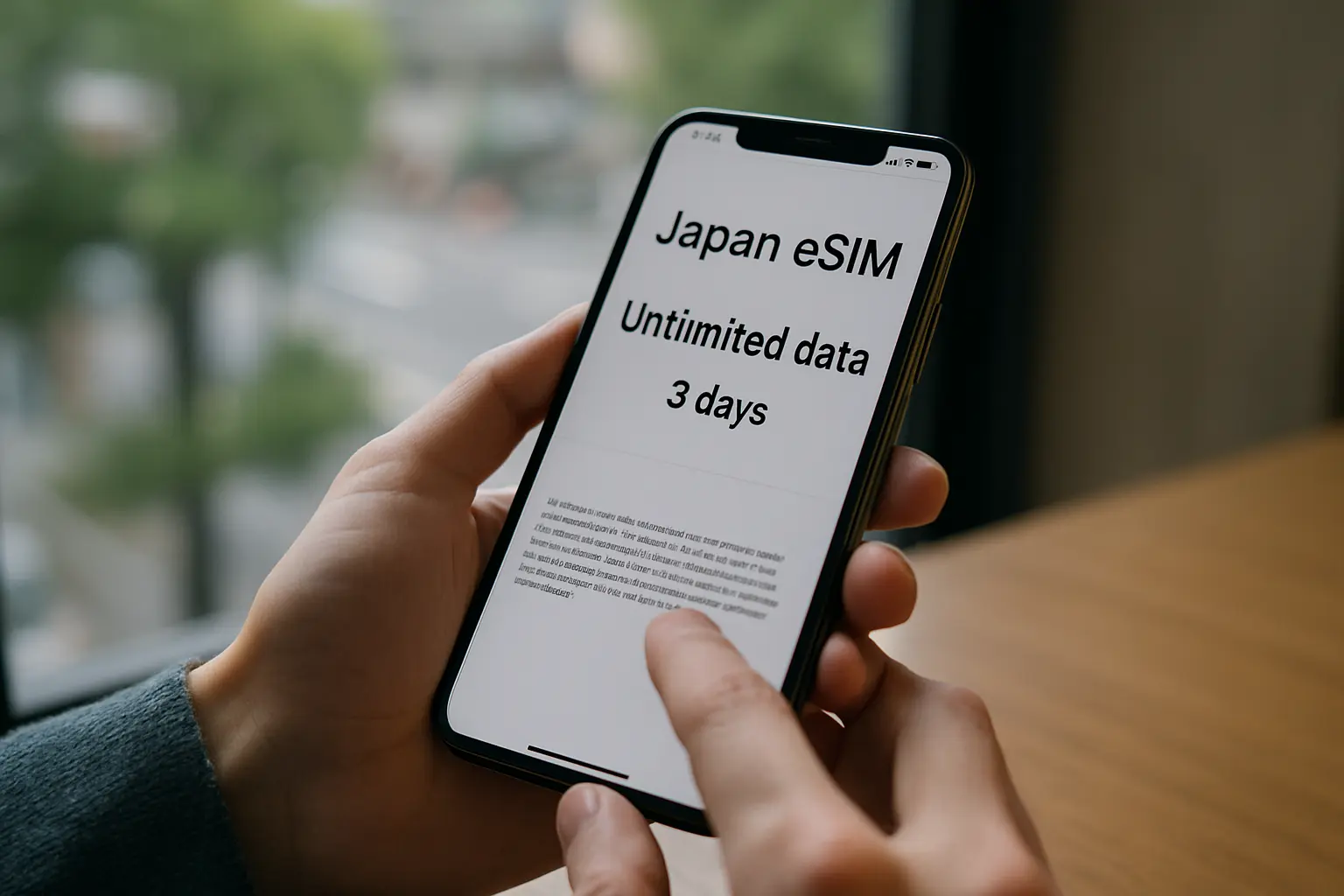
What "Unlimited" Really Means on a Japan eSIM
If you've browsed Japan eSIM plans and seen the word "unlimited," you've probably wondered whether it means what it says. The short answer is no—not in the way most people understand it. "Unlimited" on a Japan eSIM typically refers to duration, not speed. Once you hit a daily data threshold, your connection slows to a point where streaming, video calls, and downloads become impractical, even though technically you can keep using data.
The Fine Print Behind "Unlimited"
Most Japan eSIM providers use "unlimited" to describe what happens after you exhaust your high-speed allowance each day. You don't lose connectivity; instead, you're throttled to a much slower speed. This is a real difference from having your service cut off entirely, but it's not the same as having truly unlimited fast data.
Take Airalo's two Japan options, both marketed with "Unlimited" in their names. The Asialink Unlimited and Moshi Moshi Unlimited plans (priced at $11.50 for 3 days, as of August 2026) both give you 3 GB per day at full speed. Once you've used those 3 GB, your data speed drops to 1 Mbps for the rest of the day—and this slowdown applies for the entire duration of your plan. You can keep using data, but at a speed that makes most online activities frustratingly slow.
Meanwhile, iRoamly's free Japan plan takes a different approach: it offers 500 MB at full speed, then switches to 384 kbps "unlimited" for 1 day. That's even slower than Airalo's throttle point.
Why the Speed Matters
The distinction between "unlimited" duration and unlimited speed is more than semantic. At 1 Mbps, you can still send messages, load basic web pages (slowly), and check email. At 384 kbps, even those tasks become sluggish. Neither speed is usable for video streaming, video calls, or downloading files of any size.
If you're planning to use your phone for navigation, social media, messaging apps, or work calls while traveling in Japan, hitting your daily data cap and being throttled to these speeds will noticeably change your experience. Whether that trade-off is acceptable depends on your needs and how disciplined you can be about data use.
Who These Plans Work For
The throttled-after-cap model works well if you use data sparingly—brief map checks, occasional messaging, hotel WiFi for the rest. It's also useful as a backup connection when your primary SIM fails or as a way to avoid surprise roaming charges on your home plan. If your usage is light and bursty rather than constant, you may never hit the cap in a day, making the "unlimited" label largely irrelevant.
They work less well if you plan to stream video, attend video meetings, or use data-heavy apps throughout your trip. In those cases, you're better off calculating your realistic daily data needs and choosing a plan with a higher daily allowance at full speed, even if it costs more.
Checking Before You Buy
Pricing and plan details on eSIM services change regularly. The figures here were gathered on 2 August 2026, so confirm current pricing and terms directly with the provider before purchasing. Also check whether the daily cap resets at midnight in Japan time or your local time zone—this detail can affect how the plan works in practice.
When you're comparing Japan eSIM plans, read the speed figures in the small print as carefully as the headline numbers. If it says "unlimited" but doesn't specify a full-speed daily allowance, ask what happens to your speed once that allowance is gone. The answer will tell you whether you're buying the plan you actually need.