Why the same 5 GB of data costs more on a 30-day eSIM than a 7-day one
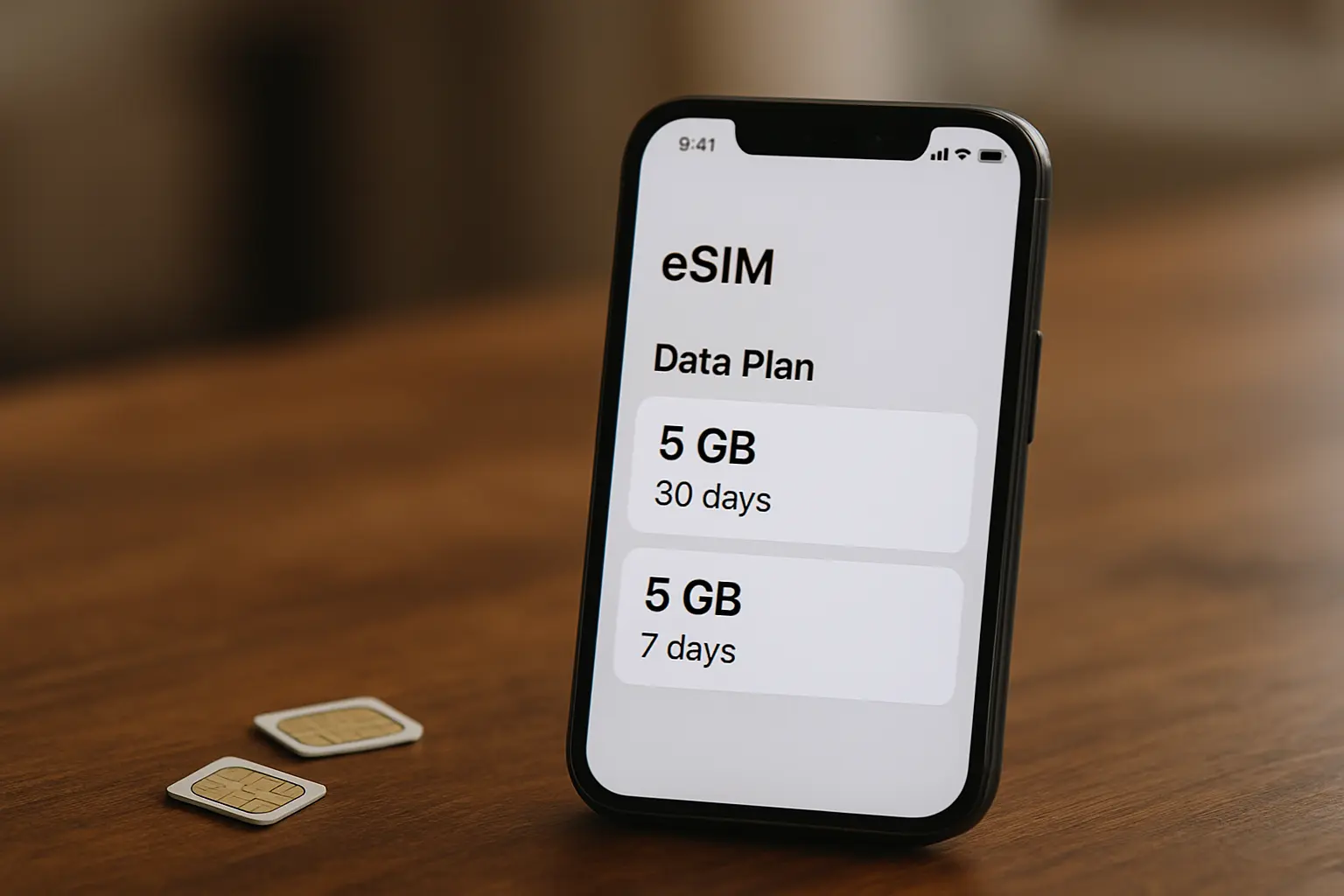
Why eSIM Data Costs More Over Longer Validity Periods
When you buy an eSIM plan, you're not paying for data alone. You're paying for two things at once: a quantity of data and a window of time in which to use it. Understanding this split explains why the same 5 GB of allowance costs more on a 30-day plan than a 7-day one—and why that makes economic sense.
The Two-Part Price
Data allowance and validity period are priced independently. A provider isn't just selling you gigabytes; it's also selling you access to its network for a specific duration. The longer you want that access to remain active, the more you pay, even if your data quota stays identical.
This becomes clear when you look at real pricing. Airalo's Moshi Moshi Japan plan charges $10.00 for 5 GB valid for 7 days. The same 5 GB for 15 days costs $10.50. For 30 days, it rises to $11.00. The step from 7 to 30 days adds exactly $1.00 to the bill for zero additional data—you're paying only for the extra time your plan remains active.
The Asialink package follows the same logic: 5 GB is $14.00 for 7 days, $14.50 for 15 days, and $15.00 for 30 days. Again, the 30-day validity period costs $1.00 more than the 7-day one for identical data.
Even smaller plans show this pattern. Airalo's Moshi Moshi 3 GB allowance costs $7.50 for 3 days of validity and $8.00 for 7 days—a $0.50 premium for the same gigabytes, purchased for a longer active period.
Why This Pricing Exists
When you buy a plan with a longer validity window, the provider must hold your account active and maintain your access to its network infrastructure for that entire period. From the provider's perspective, this is a service cost. Even if you use your data on day one and never connect again, the provider's systems continue to reserve capacity for your account until the validity period ends.
This is fundamentally different from buying more data. An extra gigabyte represents actual usage: transmission across the network, bandwidth consumed, and infrastructure strain. A longer validity period is pure account maintenance—your plan sits on the provider's servers whether you're actively using it or not.
Some eSIM providers also build in an incentive structure. By charging more for longer validity, they encourage users to choose shorter plans when they don't need extended access, which keeps their active account base and infrastructure load more manageable. The longer you bind your plan, the more you should expect to pay.
What Happens When Validity Ends
Your validity period is the deadline by which you must use your data allowance. If your plan expires, any remaining data is lost. This is why the length of validity matters: a 7-day plan forces you to consume your data faster, while a 30-day plan gives you four times as long to use the same amount.
This also means that if you buy a 30-day plan expecting to use it over a year, that won't work. The data and the time are bundled together. Once the calendar reaches day 31, your access ends regardless of how many gigabytes remain.
The data itself doesn't expire in the way a perishable product does—there's no technical degradation. But your right to use it expires when the validity period ends. If you don't consume your 5 GB within your 30 days of access, those unused gigabytes simply vanish.
When to Choose Shorter or Longer Plans
If you're traveling for a week or less, a 7-day plan is usually the better value. You pay the lower price, and you get the same data—just compressed into a tighter timeframe. The $1.00 difference between 7 and 30 days on a 5 GB plan is modest, but it's still money saved if you don't need the extra validity.
For travelers who will be away for multiple weeks, or who want a safety margin to use their data if their trip extends, the 30-day plan makes sense despite the higher price. You're paying for the assurance that your access won't expire mid-trip.
The key is matching the plan's validity to when you actually need connectivity. Buying a 30-day plan for a 3-day trip wastes the time portion of what you're paying for. Conversely, buying a 7-day plan for a month-long journey risks running out of validity before you've used your data.
Prices cited here were current as of 2026-08-01. eSIM pricing and plan structures change frequently, so check your provider's current rates before purchasing.